Showing posts with label Maccabees. Show all posts

Thursday, October 28, 2010

Saint Judas Maccabaeus Fact Sheet


Judas, the Valiant


Maccabee Facts about St. Judas Maccabaeus

The Life of St. Judas Maccabeus
PLACE OF BIRTH: Modi'in (Modein), Judea
PLACE OF DEATH: Elasa (160 BC), near modern day Ramallah
MILITARY SERVICE: Rebel leader and commander of the Maccabees
YEARS OF SERVICE: 167-160 BC
BATTLES/WARS: Revolt of the Maccabees
LEGACY: Military hero, Defender of Judaism, Founder of Hanukkah
PRESTIGE: One of the Nine Worthies, which include nine of the greatest Judeo-Christian warriors of all time
JUDAISM: Seen as one of greatest Jewish warriors in history, alongside Joshua, Gideon and David
ESTABLISHMENT: Founded the holiday of Hanukkah and the Hasmonean Dynasty of Israel

The Faith of St. Judas Maccabaeus

RELIGION: Orthodox Temple Judaism
FAITH: Devout, traditional
BIBLE: Book of the Maccabees I and II
APOCRYPHA: Book of the Maccabees III, IV, and V
OTHER BOOKS: Book of the Maccabees VI, VII, VIII, and the three Ethiopian books of Meqabyan
TRADITION: One of the most celebrated Judeo-Christian heroes in history
JUDAISM: Founder of the festival of Hanukkah (Dedication), an official holiday of Judaism
CHRISTIANITY: Considered a Saint residing in the Christian Kingdom of Heaven
RECOGNITION: Honored by Roman Catholicism, Eastern Orthodox, Ethiopian and Coptic Christianity
CHURCHES: I. St. Mary and St. Shmuni Church, in Sinstorf (Hamburg, Germany), II. Chapel of the Maccabees, in Saint-Pierre, (Geneva, Switzerland), III. St. Maccabees Church, in Cologne, (Germany), IV. Church of St. Maccabees Brothers in Lady, (Poland)

Ancestry of St. Judas Maccabaeus

ROYAL LINE: Hasmonean Dynasty
TRIBE OF ISRAEL: Levi
FAMILY HOUSE: House of Asamoneus
PRIESTHOOD: Seven Watchtowers of Joarib
FATHER: Mattathias the Hasmonean
BIRTH ORDER: Third-born son
BROTHERS: Jonathan Apphus, John Gaddis, Simon Thassi, Eleazar Avaran
FAMILY TOMB: Modi'in, Israel

Various Names of St. Judas Maccabaeus
STANDARD: Judas Maccabeus, Judas Maccabaeus
TITLE: The Hammer, the Hammer of God, the Hammerer
JEWISH: Judah Maccabee, Judah the Maccabee
YIDDISH: Yehudah HaMakabi
LITERAL ENGLISH: Judah the Hammer
HEBREW: יהודה המכבי
ORIGIN: From the Aramaic 'maqqabba', or 'makebet' in modern Hebrew
ALTERNATIVE SPELLINGS: Machabeus, Maccabeus,

The Eternal Laws of St. Judas Maccabaeus
GOD: I. You will accept death over idolatry.
LIFE: II. You will accept death over murder.
SEXUALITY: III. You will accept death over sexual perversion.


The Triumph of Judas Maccabaeus

St. Judas Maccabaeus in Literature
Old English Homilies on The Maccabees, by Aelfric (c. 1000) edited by Stuart D. Lee
El Maccabeo, by Miguel de Silveyra. (Naples, 1638)
La chevalerie de Judas Macabe, by Pierre du Ryer (1600-1658)
Judas Machabaeus, (Rome 1695)
Judas Makkabaeus, by Josef Eduard Konrad Bischoff (Germany 1885)
The Hammer, by Alfred J. Church and Richmond Seeley (1890)
Alilot Gibbor ha-Yehudim Yehudah ha-Makkabi le-Veit ha-Hashmona'im, by Jacob Benjamin Katznelson (1922)
Judas Makkabaeus, ein Kleinvolk kaempft um Glaube und Heimat, by Karl Boxler (1943)
My Glorious Brothers, by Howard Fast (1948)
Yehudah ha-Makkabi in A Layter tsu der Zun, by Moses Schulstein (1954)
Yehudah ha-Makkabi in Sippurim le-Mofet, by Jacob Fichmann (1954)


King David with Judas on Right

St. Judas Maccabaeus in Theatre
Judas Maccabeaus, by William Houghton (1601)
Giuda Maccabeo, ossia la morte di Nicanore, an Oratorio adapted by Vallicella (1839)
Judas Maccabaeus, by Henry Wadsworth Longfellow (1872)

St. Judas Maccabaeus in Art
The illustrated manuscript Libri Maccabaeorum (900s AD).
Josephus, illustrations by Jean Fouquet
Chapel of the Dead in Tournai Cathedral, by Rubens
Illustrated English Bible, illustrated by Paul Gustave Dore
Nine Heroes Tapestries at the Metropolitan Museum (South Netherlandish, ca. 1400-1410)
The Triumph of Judas Maccabeus, by Gerrit van Honthorst

St. Judas Maccabaeus in Music

Judas Maccabaeus, an Oratorio, by George Frideric Handel (1746)
Song of Judas Maccabeus Before the Battle of Maspha, by Rebekah Hyneman (1816-1875)
The Battle-Cry of the South, by James R. Randall (1860s)

St. Judas Maccabaeus Briefly Mentioned in...
The Divine Comedy, by Dante
Love's Labour's Lost, by William Shakespeare
The song Hanukkah in Santa Monica, by Tom Lehrer
The song Jerusalem, by Mirah
The book Treatise on Twelve Lights, Ch. 5 (Recourse to the Sword), by Robert Struble (2007-08)


Judas Maccabaeus, the Hammer of God

May the LORD God bless you in the name of St. Judas Maccabaeus.


Jason Nicholas Korning


SOURCE(S): - Judas Maccabaeus, Wikipedia. (http://en.wikipedia.org/wiki/Judas_Maccabeus), Judas Maccabaeus on the web, by Tim Spalding. (http://www.isidore-of-seville.com/maccabeus/), Books of the Maccabees, Wikipedia.(http://en.wikipedia.org/wiki/Books_of_the_Maccabees), Category: Holy Maccabees Churches, Wikimedia. (http://commons.wikimedia.org/wiki/Category:Holy_Maccabees_churches)

The Scroll of Antiochus (Megillat Antiochus)

The Scroll of Antiochus. Megillat Antiochus

The Greek monarch Antiochus was a powerful ruler; all the kings heeded him. He subdued many provinces and mighty sovereigns; he destroyed their castles, burned their palaces and imprisoned their men. Since the reign of Alexander there had never been a king like him beyond the Euphrates. He erected a large city on the seacoast to serve as his royal residence, and called it "Antioch" after his own name. Opposite it his governor Bagris founded another city, and called it "City of Bagris" after himself. Such are their names to this day.

In the twenty-third year of his reign, the two hundred and thirteenth year after the Temple had been rebuilt, Antiochus determined to march on Jerusalem. He said to his officers: "You are aware that the Jews of Jerusalem are in our midst. They neither offer sacrifices to our gods nor observe our laws; they abandon the king's laws to practice their own. They hope moreover for the day when kings and tyrants shall be crushed, saying: 'O that our own king might reign over us, that we might rule the sea and the land, so that the entire world would be ours.' It is indeed a disgrace for the royal government to let them remain on the face of the earth. Come now, let us attack them and abolish the covenant made with them: Shabbat, Rosh Chodesh and circumcision." The proposal pleased his officers and all his host.

Immediately king Antiochus dispatched his governor Nicanor with a large body of troops. He came to the Jewish, city of Jerusalem and massacred many people; he set up a heathen altar in the Temple, concerning which the G-d of Israel had said to his faithful prophets: "There will I establish my residence forever." In that very place they slaughtered a swine and brought its blood into the holy court. When Yochanan ben Matityahu heard of this deed, he was filled with rage and his face changed color. In his heart he drew a plan of action. He then made himself a dagger, two spans long and one span wide, and concealed it under his clothes. He came to Jerusalem and stood at the royal gate, calling to this gate-keepers: "I am Yochanan ben Matityahu; I have come to appear before Nicanor." The guards informed Nicanor that the high priest of the Jews was standing at the door. "Let him enter!" Nicanor said.

Yochanan was admitted to Nicanor, who said: "You are one of the rebels who-rebel against the king and do not care for the welfare of his government!" Yochanan replied: "My lord, I have come to you; whatever you demand I will do." "If you wish to do as I please," said Nicanor, "then take a swine and sacrifice it upon the altar. You shall wear royal clothes and ride the king's own horse; you shall be counted among the king's close friends." To this, Yochanan answered: "My lord, I am afraid of the Israelites; if they hear that I have done such a thing they will stone me. Let everyone leave your presence, so as not to inform them." Immediately Nicanor ordered everybody out.

At, that moment Yochanan ben Matityahu raised his eyes to heaven and prayed; "My G-d and G-d of my fathers Avraham, Yitzchak, and Yaakov, do not hand me over to this heathen; for if he kills me, he will boast in the temple of Dagon that his god has handed me over to him." He advanced three steps toward Nicanor, thrust the dagger into his heart, and flung him fatally wounded into the court of the Temple. "My G-d," Yochanan prayed, "do not count it a sin that I killed this heathen in the Sanctuary; punish thus all the foes who came with him to persecute Judea and Jerusalem." On that day Yochanan set out and fought the enemy, inflicting heavy slaughter on them. The number of those who were slain by him on that day totaled two thousand seven hundred. Upon returning, he erected a column with the inscription: "Maccabee, Destroyer of Tyrants."

When king Antiochus heard that his governor Nicanor had been slain, he was bitterly distressed. He sent for wicked Bagris, the deceiver of his people, and told him: "Do you not know, have you not heard, what the Israelites did to me? They massacred my troops and ransacked my camps! Can you now be sure of your wealth? Will your homes remain yours? Come, let us move against them and abolish the covenant which their G-d made with them: Shabbat, Rosh Chodesh, and circumcision." Then wicked Bagris and his hosts invaded Jerusalem, murdering the population and proclaiming an absolute decree against Shabbat, Rosh Chodesh, and circumcision. So drastic was the king's edict that when a man was discovered to have circumcised his son, he and his wife were hanged along with the child. A woman gave birth to a son after her husband's death and had him circumcised when he was eight days old. With the child in her arms, she went up on top of the wall of Jerusalem and cried out: "We say to you, wicked Bagris: This covenant of our fathers which you intend to destroy shall never cease from us nor from our children's children." She cast her son down to the ground and flung herself after him so that they died together. Many Israelites of that period did the same, refusing to renounce the covenant of their fathers.

Some of the Jews said to one another: "Come, let us keep Shabbat in a cave lest we violate it." When they were betrayed to Bagris, he dispatched armed men who sat down at the entrance of the cave and said: "You Jews, surrender to us! Eat of our bread, drink of our wine, and do what we do!" But the Jews said to one another: "We remember what we were commanded on Mount Sinai: 'Six days you shall labor and do all your work; on the seventh day you shall rest.' It is better for us to die than to desecrate Shabbat." When the Jews failed to come out, wood was brought and set on fire at the entrance of the cave. About a thousand men and women died there. Later the five sons of Matityahu, Yochanan and his four brothers, set out and routed the hostile forces, whom they drove to the coast; for they trusted in the G-d of heaven.

Wicked Bagris, accompanied by those who had escaped the sword, boarded a ship and fled to king Antiochus. "O king," he said, "you have issued a decree abolishing Shabbat, Rosh Chodesh, and circumcision in Judea, and now there is complete rebellion there. The five sons of Matityahu cannot be defeated unless they are attacked by all the combined forces; they are stronger than lions, swifter than eagles, braver than bears. Be pleased to accept my advice, and do not fight them with this small army lest you be disgraced in the sight of all the kings. Send letters to all your royal provinces; let all the army officers without exception come with armored elephants." This pleased king Antiochus. He sent letters to all his royal domains, and the chieftains of various clans arrived with armored elephants. Wicked Bagris invaded Jerusalem for the second time. He broke through the wall, shattered the gateway, made thirteen breaches in the Temple, and ground the stones to dust. He thought to himself: "This time they shall not defeat me; my army is numerous, my hand is mighty." However, the G-d of heaven did not think so.

The five sons of Matityahu went to Mizpeh in Gilead, where the house of Israel had been saved in the days of Shmuel Hanavi. They fasted, sat in ashes and prayed to the G-d of heaven for mercy; then a good plan came to their mind. These were their names: Yehudah, the firstborn; Shimon, the second; Yochanan, the third; Yonatan, the fourth; Elazar, the fifth. Their father blessed them, saying: "Yehudah my son, I compare you to Yehudah the son of Yaakov who was likened to a lion. Shimon my son, I compare, you to Shimon the son of Yaakov who slew the men of Shchem. Yochanan my son, I compare you to Avner the son of Ner, general of Israel's army. Yonatan my son, I compare you to Yonatan the son of Shaul who defeated the Philistines. Elazar my son, I compare you to Pinchas the son of Elazar, who was zealous for his G-d and rescued the Israelites." Soon afterwards the five sons of Matityahu attacked the pagan forces, inflicting severe losses upon them. One, of the brothers, Yehudah, was killed.

When the sons of Matityahu discovered that Yehudah had been slain, they returned to their father who asked: "Why did you come back?" They replied: "Our brother Yehudah, who alone equaled all of us, has been killed." "I will join you in the battle against the heathen," Matityahu said, "lest they destroy the house of Israel; why be so dismayed over your brother?" He joined his sons that same day and waged war against the enemy. The G-d of heaven delivered into their hands all swordsmen and archers, army officers and high officials. None of these survived. Others were compelled to seek refuge in the coastal cities. In attacking the elephants, Elazar was engulfed in their dung. His brothers searched for him among the living and the dead, and could not find him. Eventually, however, they did find him.

The Jews rejoiced over the defeat of their enemies, some of whom were burned while others, were hanged on the gallows. Wicked Bagris was included among those who were burned to death. When king Antiochus heard that his governor Bagris and the army officers had been killed, he boarded a ship and fled to the coastal cities. Wherever he came the people rebelled and called him "The Fugitive," so he drowned himself in the sea.

The Hasmoneans entered the Sanctuary, rebuilt the gates, closed the breaches, and cleansed the Temple court from the slain and the impurities. They looked for pure olive oil to light the Menorah, and found only one bottle with the seal of the Kohen Gadol so that they were sure of its purity. Though its quantity seemed sufficient only for one day's lighting, it lasted for eight days owing to the blessing of the G-d of heaven who had established His Name there. Hence, the Hasmoneans and all the Jews alike instituted these eight days as a time of feasting and rejoicing, like any festival prescribed in the Torah, and of kindling lights to commemorate the victories G-d had given them. Mourning and fasting are forbidden on Chanukah, except in the case of an individual's vow which must be discharged. Nevertheless, the Hasmoneans did not prohibit work on this holiday.

From that time on the Greek government was stripped of its renown. The Hasmoneans and their descendants ruled for two hundred and six years, until the destruction of the Beit Hamikdash.

And so the Jews everywhere observe this festival for eight days, beginning on the twenty-fifth of Kislev. These days, instituted by Kohanim, Levites and Sages of Temple times, shall be celebrated by their descendants forever.

The Al-mighty Who performed for them a miracle and wonder, may He perform for us miracles and wonders. And we should see the fulfillment of what is written (Michah 7:15) "As in the days when you left the land of Egypt I will show it wonders."

- Scroll of Antiochus, Megillat Antiochus

Wednesday, October 27, 2010

A Few of the Best Ikons of St. Judas Maccabaeus

The Artworks featuring St. Judas Maccabaeus
The Triumph of Judas Maccabeus


The Triumph of Judas Maccabaeus, by Gerrit van Honthorst


Braves and Heroines Series: King David and Judas Maccabeus


The Nine Worthies and the Nine Worthy Women, King David and Judas Maccabeus, by Giacomo Jaquerio


Judas Maccabeus at Maspha, Illustration from


Judas Maccabeus at Maspha, Illustration from 'L'Ancien Testament'


Judas Maccabeus Jewish Patriot Leader


Judas Maccabaeus, a French Engraving


http://www.french-engravings.com/images/artworks/ART-6218/HQ.jpg


Saint John the Baptist in front of the King Herod - Jesus Christ Raising the Son of the Widow of Nain - Judas Maccabeus, An Original Wood Engraving, Anonymous, 1891

Friday, October 15, 2010

The Basics of Maccabee Christianity


The Many Crosses of the Christian Faith


The Basic Facts of Maccabee Christianity

Religion:
Roman Catholic, Orthodox Catholic, Eastern Orthodox, Coptic and Ethiopian Christianity
Founder: Rabbi Joshua ben Joseph, the Nazarene (Jesus Christ)
Lifespan: 0 B.C. to 33 A.D.
Successor: Simon Peter
Leaders: 12 Apostles, 72 Disciples
Location: Rome, Constantinople, Jerusalem
Sabbath: Sunday, Saturday
Language: Latin, Greek, and Aramaic
Holy Book: Bible, Old and New Testament
Sacred Text: Book of the Maccabees I and II
Holiday: Advent, Christmas, Lent, Easter
Timeline: 33 A.D. to 2,000 A.D.
Divinity: One God in Three: the Father, the Son, and the Holy Ghost
Afterlife: Heaven, Purgatory, and Hell


The Five Aspects of Maccabee Christianity

1. Theology and Doctrines: The Holy Trinity of God, the Ancient Creed of Faith (Nicene Cree), the Seven Holy Maccabee Martyrs. the Twelve Apostles of Joshua the Messiah & Twelve Tribes of Israel, the Seven Archangels of God, the Seven Catholic Books of the Old Testament, the Seven Catholic Letters of the New Testament
2. Laws and Commandments: The Ten Commandments, the Three Greatest Commandment(s)
3. Rituals and Practices: The Sign of the Cross, the Seven Sacraments, the Seven Material and Seven Spiritual Deeds of Mercy, the Three Eminent Good Works
4. Ethics and Morality: The Seven Ancient Virtues of God, the Seven Holy & Seven Heavenly (Contrary) Virtues, the Seven Deadly Sins and the New, Seven Deadly 'Social' Sins
5. Prayers and Mysteries: The LORD's Prayer, the Hail Mary Prayer, the Apostles' Creed, the Seven Gifts and Seven Manifestations of the Holy Ghost, the Seven Joys and Seven Sorrows of Mary


1. Theology & Doctrines of Maccabee Christianity

The Holy Trinity of God
I. The Father: God, the LORD God of Israel (YHVH)
II. The Son: Rabbi Joshua the Nazarene (Jesus Christ)
III. The Holy Ghost

The Ancient Creed of Faith (Nicene Creed)

I. We believe in

One God, the Father, the Almighty, maker of heaven and earth, and of all that is, seen and unseen.

II. We believe in
One LORD, Joshua the Messiah (Jesus Christ), the only Son of God, eternally born of the Father, God from God, Light from Light, true God from true God, born not made, one in being with the Father. Through Him all things were made. For us men and for our salvation, He came down from Heaven. By the power of the Holy Ghost, He was born of the Virgin Mary and became man. For our sake He was crucified by order of Pontius Pilate. He suffered, died, and was buried. He descended into Hell. On the third day He rose again in fulfillment of the Scriptures. He ascended into Heaven and is seated at the right hand of the Father. He will come again in glory to judge the living and the dead and His kingdom will have no end.

III. We believe in
The Holy Ghost, the LORD, the giver of life, who proceeds from the Father and the Son. With the Father and the Son He is worshipped and glorified. He has spoken through the Prophets. We believe in one holy catholic and apostolic Church. We acknowledge one baptism for the forgiveness of sins. We look for the resurrection of the dead, and the life of the world to come.
Amen.

The Seven Holy Maccabee Martyrs

I. St. Abim
II. St. Antonius
III. St. Guriah
IV. St. Eleazar
V. St. Eusebon
VI. St. Alimus
VII. St. Marcellus

Their Mother: St. Solomonia
Their Teacher: St. Eleazar

The Twelve Apostles of Joshua the Messiah (Jesus Christ)

I. Peter
II. Andrew
III. James the Greater
IV. James the Lesser
V. John
VI. Philip
VII. Bartholomew
VIII. Matthew
IX. Thomas
X. Jude Thaddeus
XI. Simon
XII. Matthias (after Judas)

The Twelve Tribes of Israel

I. Reuben
II. Simeon
III. Levi
IV. Judah
V. Zabulon
VI. Issachar
VII. Dan
VIII. Gad
IX. Asher
X. Naphtali
XI. Joseph (Menasseh and Ephraim)
XII. Benjamin

The Seven Archangels of God
I. Michael
II. Gabriel
III. Raphael
IV. Uriel
V. Raguel
VI. Remiel.
VII. Saraqael

The Seven Catholic Books of the Old Testament
I. Sirach
II. Tobit
III. Wisdom
IV. Judith
V. First Maccabees
VI. Second Maccabees
VII. Baruch

The Seven Catholic Letters of the New Testament

I. James
II. Jude
III. First Peter
IV. Second Peter
V. First John
VI. Second John
VII. Third John


2. Laws and Commandments of Maccabee Christianity

The Ten Commandments

I. I am the LORD your God. You will have no other gods but Me.
II. You will not use the name of the LORD in vain.
III. You will honor the Sabbath day.
IV. You will honor your father and mother.
V. You will not kill.
VI. You will not commit adultery
VII. You will not steal.
VIII. You will not lie.
IX. You will not envy your neighbor’s wife.
X. You will not envy your neighbor’s property.

The Three Greatest Commandment(s)

I. LOVE OF GOD: Love the LORD your God with all your heart and with all your soul and with all your mind. (Matthew 22:37)
II. LOVE OF NEIGHBOR: Love your neighbor as yourself. (Matthew 22:39)
III. GOLDEN RULE: Do unto others as you would have them do unto you. (Matthew 7:12)


3. Rituals and Practices of Maccabee Christianity

The Sign of the Cross
I. In the Name of the Father: 'In the name of the Father,' (Place Right Hand on Forehead)
II. In the Name of the Son: 'the Son,' (Place Right Hand on Waist)
III. In the Name of the Holy Ghost: 'and the Holy Ghost.' (Place Right Hand on the Left then Right Shoulder)

The Seven Sacraments
I. Baptism
II. Communion
III. Confession
IV. Confirmation
V. Matrimony
VI. Ordination
VII. Anointing


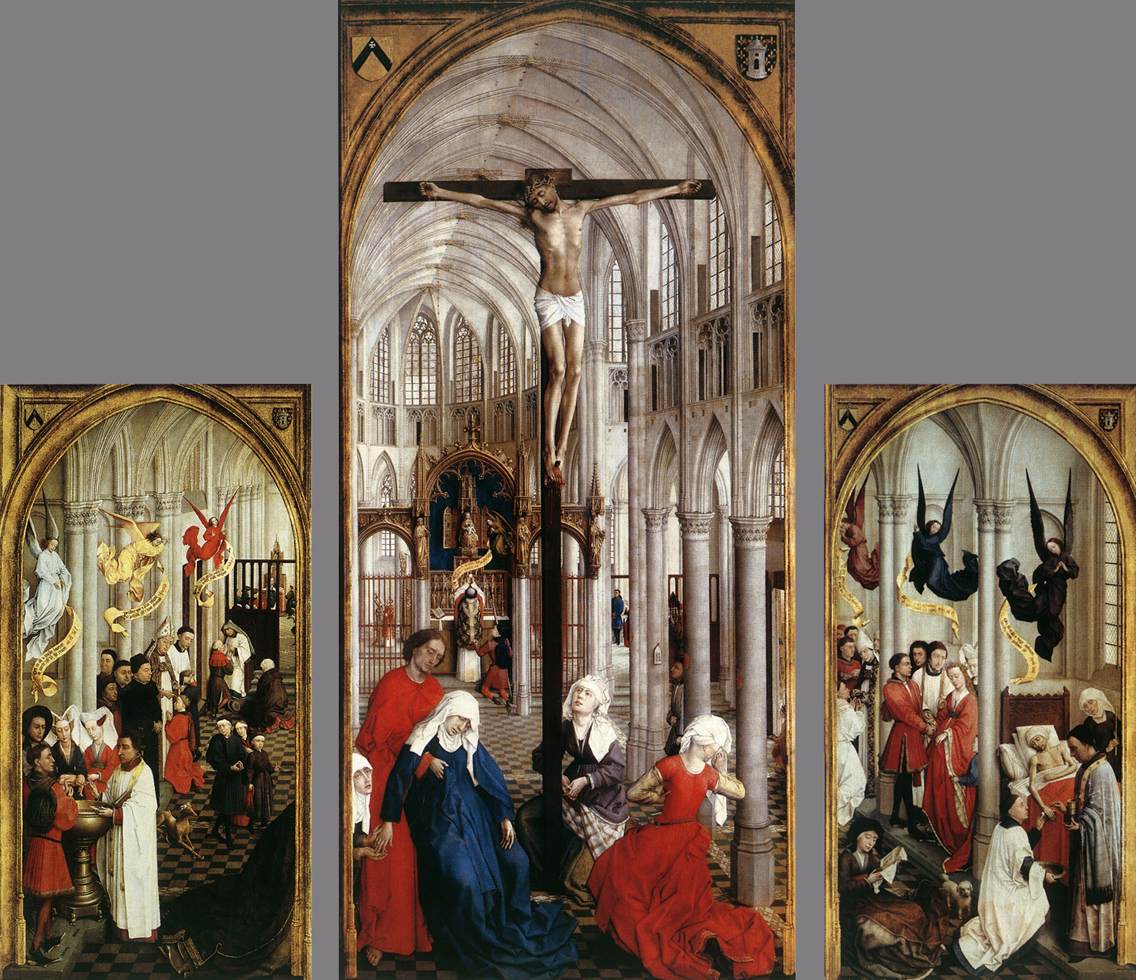
A Visual Display of the Seven Sacraments

The Seven Material Deeds of Mercy
I. Feed the Hungry
II. Quench the Thirsty.
III. Clothe the Naked.
IV. Shelter the Homeless
V. Visit the Imprisoned
VI. Comfort the Sick
VII. Bury the Dead

The Seven Spiritual Deeds of Mercy

I. Instruct Ignorance
II. Counsel Doubt
III. Rebuke Sinners
IV. Endure Others Patiently
V. Forgive Others Willingly
VI. Comfort Affliction
VII. Pray for the the Living and the Dead

The Three Eminent Good Works
I. Prayer
II. Fasting
III. Charity


4. Ethics & Morality of Maccabee Christianity

The Seven Ancient Virtues of God
I. Prudence
II. Justice
III. Temperance
IV. Fortitude
V. Faith
VI. Hope
VII. Love

The Seven Holy Virtues
I. Valour
II. Generosity
III. Liberality
IV. Diligence
V. Patience
VI. Kindness
VII. Humility

The Seven Heavenly (Contrary) Virtues
I. Chastity
II. Temperance
III. Charity
IV. Diligence
V. Patience
VI. Kindness
VII. Humility

The Seven Deadly Sins
I. Lust
II. Gluttony
III. Greed
IV. Sloth
V. Wrath
VI. Envy
VII. Pride

The New, Seven Deadly 'Social' Sins

I. Human Experimentation
II. Genetic Manipulation
III. Environmental Pollution
IV. Social Injustice
V. Poverty Causation
VI. Excessive Wealth
VII. Drug Abuse


5. Prayers & Mysteries of Maccabee Christianity

The LORD’s Prayer

Our Father,
Who is in Heaven,
Holy is your name.
May your kingdom come,
Your will be done,
On earth as it is in Heaven.
Give us this day our daily bread
And forgive us our sins
As we forgive those who sin against us.
Let us not into temptation,
But deliver us from evil.
Amen.

The Hail Mary Prayer

Hail Mary,
Full of grace,
The LORD is with you.
Blessed are you among women
And blessed is the son
Of your womb Joshua

Holy Mary,
Mother of God,
Prayer for us sinners
Now and at the
Hour of our death.
Amen.

The Apostles' Creed
I believe in God, the Father Almighty, Creator of Heaven and Earth.

I believe in Joshua the Messiah (Jesus Christ), His only Son, our LORD. He was conceived by the power of the Holy Ghost and born of the Virgin Mary. He suffered under Pontius Pilate, was crucified, died, and was buried. He descended into hell. On the third day He rose again. He ascended into heaven and is seated at the right hand of the Father. He will come again to judge the living and the dead.

I believe in the Holy Ghost, the Holy Catholic Church, the Communion of Saints, the forgiveness of sins, the resurrection of the body, and the life everlasting.
Amen.

The Seven Gifts of the Holy Ghost

I. Wisdom
II. Understanding
III. Counsel
IV. Courage
V. Knowledge
VI. Reverence
VII. Fear of the LORD

The Seven Manifestations of the Holy Ghost
I. Love
II. Joy
III. Peace
IV. Long-Suffering
V. Gentleness
VI. Goodness
VII. Faith

The Seven Joys of Mary

I. The Annunciation of Joshua
II. The Nativity of Joshua
III. The Gifts of the Three Wise Men
IV. The Resurrection of Joshua
V. The Ascension of Joshua
VI. The Pentecost, or Descent, of the Holy Ghost
VII. The Heavenly Coronation of Mary

The Seven Sorrows of Mary

I. The Prophecy about Joshua
II. The Exile of Joshua
III. The Disappearance of Joshua
IV. The Cross-bearing of Joshua
V. The Crucifixion of Joshua
VI. The Dead Body of Joshua
VII. The Burial of Joshua

May the LORD God bless you in the name of St. Judas Maccabaeus.

Jason Nicholas Corning

The Symbols of Maccabee Christianity


The Crosses of Christianity


St. Peter's Cross


Hebrew Peace Activism


The Judeo-Christian Tradition


The Judeo-Christian Tradition of the Maccabees


The Orthodox Judeo-Christian Tradition


The Symbol of Judeo-Christianity